A consumerist system creates a belief in the “scarcity within,” the belief that we need material goods to invoke the imagination, that we are incapable of constructing our own lives out of whatever we have at our disposal, that only others can provide us with the things needed to live. We learn that lifestyle is something to be bought, not created. Over time this belief can cause depression and a lack of meaning.
As I mentioned earlier, I built a homemade igloo this weekend with my kids.
As a result of all this snow we’re getting here in North Carolina, we had a remote day today at the college where I teach. With having classes today, I knew I had Zoom on the docket for today. But I hate teaching over Zoom, so I wondered how could I make this a bit more interesting?
I’m putting together a workshop I’ll be offering in PDX among #Quakers in March.
Here’s the working title and description:
Endless Revolution - The Lamb’s War and Framing Quaker Relationships to Empire Today
Description: In this workshop, we will explore the early political and theological context of both the early Church and Early Friends, explore the Book of Revelation as a basis for understanding their relationship to empire and “the Lamb’s War.” We will look at what, if anything, the Lamb’s War has to do with Friends Today, and consider some practices of resistance that may be meaningful as we consider our own relationship to the American Empire. There will be presentation and small group discussion in this workshop.
A friend just shared this link and some comments to a new book on that sounds really good:
Don’t Forget We’re Here Forever: A New Generation’s Search for Religion, by Lamorna Ash (Bloomsbury, 2025)
The relevance for Quakers can be seen in this comment: From Quaker Theology group FB 1-20-26
Lamorna Ash (on British Quakers): “But the reason I didn’t stay in the end in the Quaker meeting house was because I think again having been brought up with no faith, I had no amateur of belief like I think I started to have this sense that one I needed something to wrestle with.
North Carolina got a huge amount of snow (for us) this past weekend. 10-12 inches where we live. The snow was much that we were pretty well locked into the house for a couple day.
Because, I’ve been wanting to build an igloo with my kids for ages, I saw my chance.
I managed to get them outside (and off their screens) to work on it with me the last couple days.
In the year they come for us
watch my people
make protest signs
out of old pizza boxes.
Watch-
there are no boring people
which is unfortunate.
You’d think statistically
we’d get at least a few-
one-speed souls
with just meh stuff to do.
But none of them are dull.
Each—
a suitcase
held together
by duct tape.
These are your coffee-stained saints
who rise not with trumpets
but with Advil.
They stand
and wait
creased like maps
of a country
that doesn’t exist anymore.
I’ve been getting up each weekday morning at 5:45 so I can spend an hour in deep work. I log my work each morning in a Midori notebook so I can see how many hours I worked that week and what I worked on. It’s a simple practice but honestly, I look forward to it and it’s often my favorite part of the day.
Up this morning, working on editing the last section of a short story I’m writing: dystopian fiction about a Mobile AI Unit that starts attending a Quaker meeting and what happens when the people there start to rely on it too much.
Last night we started watching: Hijack Season 2. Great opening episode. 🍿
Here’s how Auden explained it in his essay “Some Reflections on the Arts”:
Every genuine work of art exhibits two qualities, Nowness—an art-historian can assign at least an approximate date to its making—and Permanence—it remains on hand in the world long after its maker and his society have ceased to exist.
This means that, in the history of Art, unlike the history of Science, though there are periods of flowering and sterility, there is no such thing as Progress, only Change. Shakespeare does not supersede Aeschylus or Mozart Moteverdi, in the way that the Copernican picture of the Cosmos, for example, superseded the Ptolemaic.
Consequently, one of the greatest blessings conferred on our lives by the Arts is that they are our chief means of breaking bread with the dead, and I think that, without communication with the dead, a fully human life is not possible.
Throughout history, humanity has achieved extraordinary things without artificial intelligence. The pyramids. The Renaissance. The Industrial Revolution. Medical discoveries that saved millions. Literary masterpieces that moved generations. All of this innovation stemmed from uniquely human qualities: curiosity, imagination, perseverance, and the tangible act of creation. Yet now, as digital tools promise to “enhance” our creativity, we find ourselves more anxious and distracted than ever. Research has shown that excessive social media use and constant digital engagement correlate with increased anxiety and decreased well-being (Hunt et al., 2018). Perhaps the solution isn’t more technology to combat technology’s effects, but rather a deliberate step backward. To retrieve analog practices that have sustained human creativity for millennia.
“THE WORLD W/Out A PHONE,” they read, in heavy text that had been plunked out on a typewriter.
The posters were pasted in dorms at St. John’s College in Santa Fe, N.M., a small and rigorous liberal arts school in the foothills of the Sangre de Cristo Mountains. Each one outlined an agenda for six days of abstinence from smartphones and other devices connected to the internet.
“A period of fasting,” the fliers promised. “A self-study. A challenge.” Students who were game were instructed to report to Murchison, a dorm on the edge of campus, at 6 p.m. that Sunday.
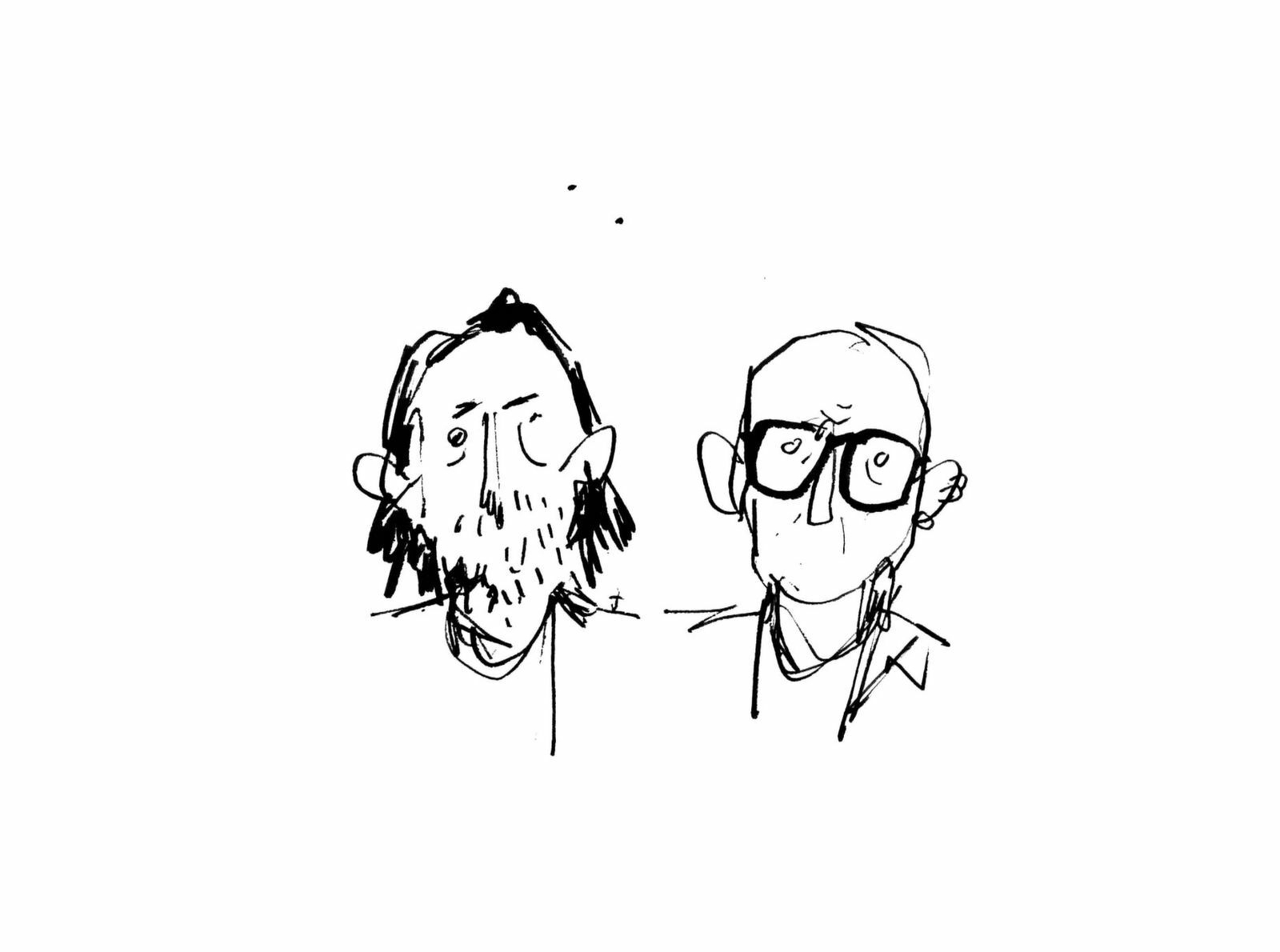
I love this post about Thom Yorke and his co-conspirator and artist Stanley Donwood and their work on Radiohead artwork. I love the way she tells the story through artwork of her own.
If you ask about Quaker beliefs these days, one of the common answers you’ll get is SPICE, a handy acronym that holds together a hodgepodge of values, namely: simplicity, peace, integrity, community and equality (and later sustainability to become SPICES). One Quaker school definitively puts it, “Quakers agree to a core set of values, known as testimonies.” I’ve not found SPICES listed before 2000 and even many of the individual components are absent from older books of Faith and Practice.
Here’s something I’ve been doing in my class the last semester as I’ve shifted my assignments to writing reading notes on paper.
This method is meant to help you focus more on the reading rather than taking tedious notes, to keep the process simple enough that notes can be handwritten in a notebook, and point you towards more participation in class based on what was most important to you from the reading.
As I have said before: Everybody knows what this is. There is literally not one person who believes that kids learn anything about anything when they’re allowed to spend their classroom time on their laptops and phones. Everybody knows that education has been given up on; everybody knows that teachers are just babysitting; everybody knows that the fix is in.
The only question remaining is: Can we lie about the situation forever?
“I am so bored by A.I. One of the things I love about the theater is: A.I. can’t do it. I couldn’t be less interested in computers and fake things. I like people. I like the way they smell, I like the way they talk, and I like the way they think. I think of A.I. as a plagiarizing mechanism. That’s all it is. And I know it’s going to change the world, it’s screwing everybody up, and I’m not in denial about any of that. But I’m in open rebellion.”
Ethan Hawke via Austin Kleons newsletter
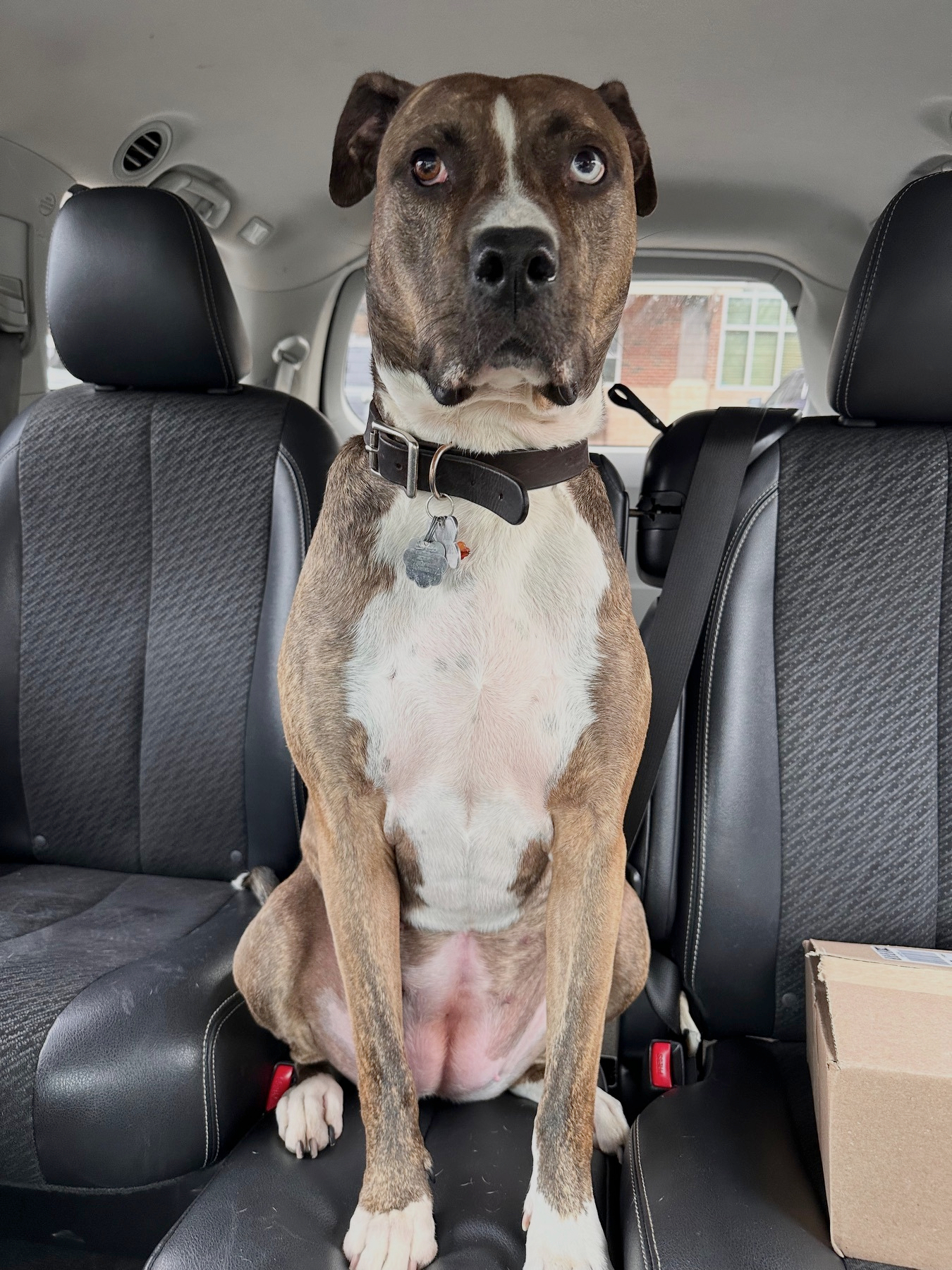
My dog on her way to the doctors. She’s not the biggest fan as you can see. Fortunately, she’s okay. She’s been limping the last few weeks but nothing seems broken.
Great news from Guilford College - we are now off of probation and have retained our accreditation. As I’ve been saying, we have a clean bill of health.